

Beginner Needlepoint Classes: Your Local Guide
Table of Contents
- What to Expect in Your First Beginner Needlepoint Class
- How to Start Needlepoint: Your First Steps
- Needlepoint Supplies for Beginners: What You Actually Need
- Choosing Your First Canvas and Yarn
- Why Join a Local Needlepoint Community
- Budget-Friendly Needlepoint for Beginners
- Needlepoint vs. Cross-Stitch: Which Fiber Art Is Right for You
- Frequently Asked Questions
Last Updated: September 18, 2026
What to Expect in Your First Beginner Needlepoint Class
Walking into your first needlepoint class can feel intimidating if you've never held a needle before. The truth is, beginner needlepoint classes are designed specifically for people with zero experience. You'll spend the first session learning the absolute basics: how to thread a needle, understand canvas mesh, and complete your first few stitches.
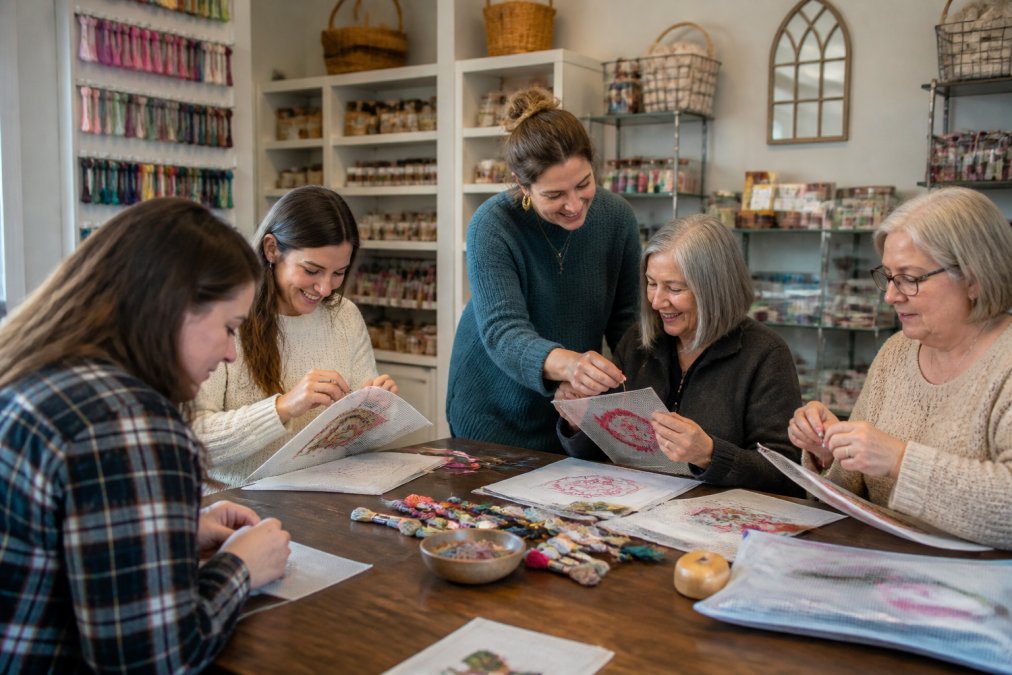
Most beginner-friendly needlepoint classes start with an overview of the materials you'll use. Your instructor will show you the canvas mesh, explain thread weight, and introduce you to the needles. Then comes the hands-on part: you'll practice basic stitches on a small sample before moving to your actual project. The pace is intentionally slow. No one expects perfection on day one.
A common concern is whether you'll feel lost among experienced stitchers. The best beginner needlepoint classes separate newcomers from advanced crafters, at least initially. This gives you space to ask questions without feeling rushed. You'll learn at your own pace, make mistakes without judgment, and build confidence with each completed row.
How to Start Needlepoint: Your First Steps
Starting needlepoint requires three things: a willingness to learn, basic supplies, and realistic expectations about the learning curve. The good news is that needlepoint has a gentler entry point than many people expect. Unlike knitting, where dropped stitches can unravel your entire project, needlepoint mistakes are isolated and easily fixed.
Threading Your Needle and Understanding Canvas Mesh
Threading a needle correctly prevents frustration before you even begin stitching. Cut a length of thread about 18 inches long, flatten one end between your fingers, and push it through the needle's eye. If you're using a tapestry needle (the standard for needlepoint), the eye is large enough that this should take just a few seconds.
Canvas mesh is the foundation of every needlepoint project. You'll encounter two main types: mono canvas, where threads are woven individually, and penelope canvas, where threads are paired. For beginners, mono canvas is more forgiving. The holes are clear, the tension is easier to control, and mistakes stand out less. When you're learning needlepoint, a 10-count or 12-count canvas gives you larger holes to work with, making the stitching process less strain on your eyes and hands.
Understanding how the mesh works changes everything about how you approach the project. Each hole in the canvas represents one stitch. Your thread goes down through one hole and up through an adjacent one. That's it. Consistent tension and following the canvas grid are what separate neat work from sloppy work.
Learning the Basketweave Stitch
The basketweave stitch is the workhorse of needlepoint. It's the stitch most beginners learn first, and for good reason: it's sturdy, it looks professional, and it distributes thread evenly across the canvas. Once you master basketweave, you can complete entire projects using just this one stitch.
Here's how it works: you create diagonal stitches across the canvas, alternating the direction of your needle as you move down each row. On odd rows, your needle angles one direction. On even rows, it angles the opposite way. This creates a woven appearance and prevents the canvas from distorting. The stitch gets its name from the interlocking pattern that resembles a woven basket.
The biggest mistake beginners make with basketweave is pulling the thread too tight. This puckers the canvas and makes subsequent stitches difficult. Pull firmly enough that the thread sits flat against the canvas, but not so tight that you're straining. It's a feel you develop over a few hours of practice. By your second or third session, your tension will improve dramatically.
Needlepoint Supplies for Beginners: What You Actually Need
You don't need to buy a closet full of supplies before starting. A beginner needlepoint supply checklist includes canvas, thread, a needle, and a way to keep your work organized. That's genuinely all you need to begin.
Canvas comes in different counts and materials. For your first project, a hand-painted canvas takes the guesswork out of color placement. The design is already painted on, so you're just filling in the stitches. This removes one layer of decision-making and lets you focus on technique. A 10-count or 12-count canvas is ideal for learning.
Thread choices matter more than most beginners realize. Tapestry yarn is the standard for needlepoint. It's thicker than embroidery floss, which means your stitches cover the canvas faster and with fewer strands. You'll typically use one or two strands depending on your canvas count. For a 10-count canvas, two strands is standard.
Your needle should be a tapestry needle with a blunt tip and a large eye. The blunt tip slides between canvas threads without splitting them. The large eye accommodates thicker thread. A size 18 or 20 tapestry needle works for most beginner projects.
Beyond these essentials, a needle threader saves frustration. A stitch guide or reference chart helps you remember stitch patterns. A project bag keeps everything organized. But none of these are required to start. The Rabbit Hole Stitchery carries a curated selection of needlepoint supplies.
Choosing Your First Canvas and Yarn
Your first canvas choice sets the tone for your entire experience. Pick something too difficult, and you'll get frustrated. Pick something too simple, and you might lose interest. The sweet spot is a hand-painted canvas with a simple design in colors you genuinely love.
Hand-painted canvases come with the design already mapped out. You're not deciding which stitch goes where or how colors blend together. You're just executing the plan. This is perfect for beginners because it removes creative decisions and lets you focus on developing consistent technique. As you gain confidence, you can move to blank canvases and design your own projects.
The size of your first project matters. A small canvas (8x10 inches) can be completed in 10-15 hours of stitching. A larger canvas (14x18 inches) takes 40+ hours. For your first project, smaller is smarter. You'll finish it, feel accomplished, and be excited to start the next one. A large unfinished project sitting on your shelf is demoralizing.
Yarn selection should match your canvas. If you're using a 10-count canvas, you need yarn thick enough to cover it with one or two strands. Tapestry yarn is the standard. It comes in hundreds of colors, but you don't need to own them all. Buy only the colors your specific project requires. The Rabbit Hole Stitchery stocks a carefully selected range of yarns.
Why Join a Local Needlepoint Community
Needlepoint doesn't have to be a solitary hobby. The best part of beginner needlepoint classes is the community aspect. You're working alongside people who are learning the same skills, making the same mistakes, and celebrating the same small victories. That shared experience builds friendships and accountability.
A local fiber arts community provides ongoing support beyond your initial classes. You'll learn from people further along in their needlepoint journey. You'll get feedback on your work. You'll discover new techniques and projects. Most importantly, you'll have people who genuinely understand why you're excited about finishing a canvas.
The Rabbit Hole Stitchery hosts classes and events specifically designed to build this community. It's not just a place to buy supplies. It's a gathering space for people who love needlework, fiber arts, and the creative process. Whether you're a complete beginner or a seasoned stitcher, you'll find people at your skill level working on projects together.
Regular meetups create accountability.
Budget-Friendly Needlepoint for Beginners
Starting needlepoint doesn't require a significant investment. Your first complete project, canvas, yarn, needle, and supplies, can be done for a modest amount. The key is avoiding expensive mistakes early on.
Needlepoint vs. Cross-Stitch: Which Fiber Art Is Right for You
Needlepoint and cross-stitch are often confused because they're both needle-and-thread crafts. But they're fundamentally different, and understanding the differences helps you choose the right hobby for you.
| What You Need | Why It Matters | Where to Start |
|---|---|---|
| Tapestry needle (size 18-20) | Large eye fits thick yarn; blunt tip doesn't split canvas | The Rabbit Hole Stitchery starter kits |
| Mono canvas (10-12 count) | Clear holes, forgiving for beginners | Hand-painted designs simplify color choices |
| Tapestry yarn (1-2 strands) | Covers canvas quickly without bulk | Buy only colors your project requires |
| Needle threader | Saves frustration threading thick yarn | Optional but highly recommended |
| Small project (8x10 or smaller) | Finishable in 10-15 hours | Builds confidence before larger projects |
EXTERNAL CITATIONS:
Frequently Asked Questions
Is needlepoint easy to teach yourself, or do I need a class?
You can teach yourself needlepoint using online tutorials and guides, but a beginner-friendly class accelerates learning. An instructor can correct your tension, show you proper threading technique, and help you troubleshoot mistakes before they frustrate you. Many people find the in-person instruction and community support makes the difference between sticking with it and giving up.
What are good beginner needlepoint projects?
Start with a small needlepoint sampler (8x10 inches or smaller) featuring simple stitches like basketweave or tent stitch. Avoid projects with intricate shading or many color changes at first. Hand-painted canvases with clear stitch guides are ideal, they show you exactly where to place each stitch. Many classes use beginner-friendly projects specifically designed to build confidence without overwhelming detail.
Is needlepointing an expensive hobby?
Needlepoint can be budget-friendly or premium depending on your choices. A basic starter kit with canvas, yarn, and needles costs less than many hobbies. Quality matters for enjoyment, cheap yarn tangles easily and frustrates beginners, but you don't need expensive supplies to start. Many local fiber arts communities offer affordable classes and can recommend supplies that balance cost with quality.
How do I find local needlepoint communities and classes?
Search for needlepoint classes and fiber arts workshops in your area, check community centers and local craft shops, and ask at fabric or yarn stores for recommendations. Many communities have needlepoint groups that meet weekly for social stitching. Local fiber arts communities often host classes, events, and finishing services, making them valuable resources for beginners seeking both instruction and connection.